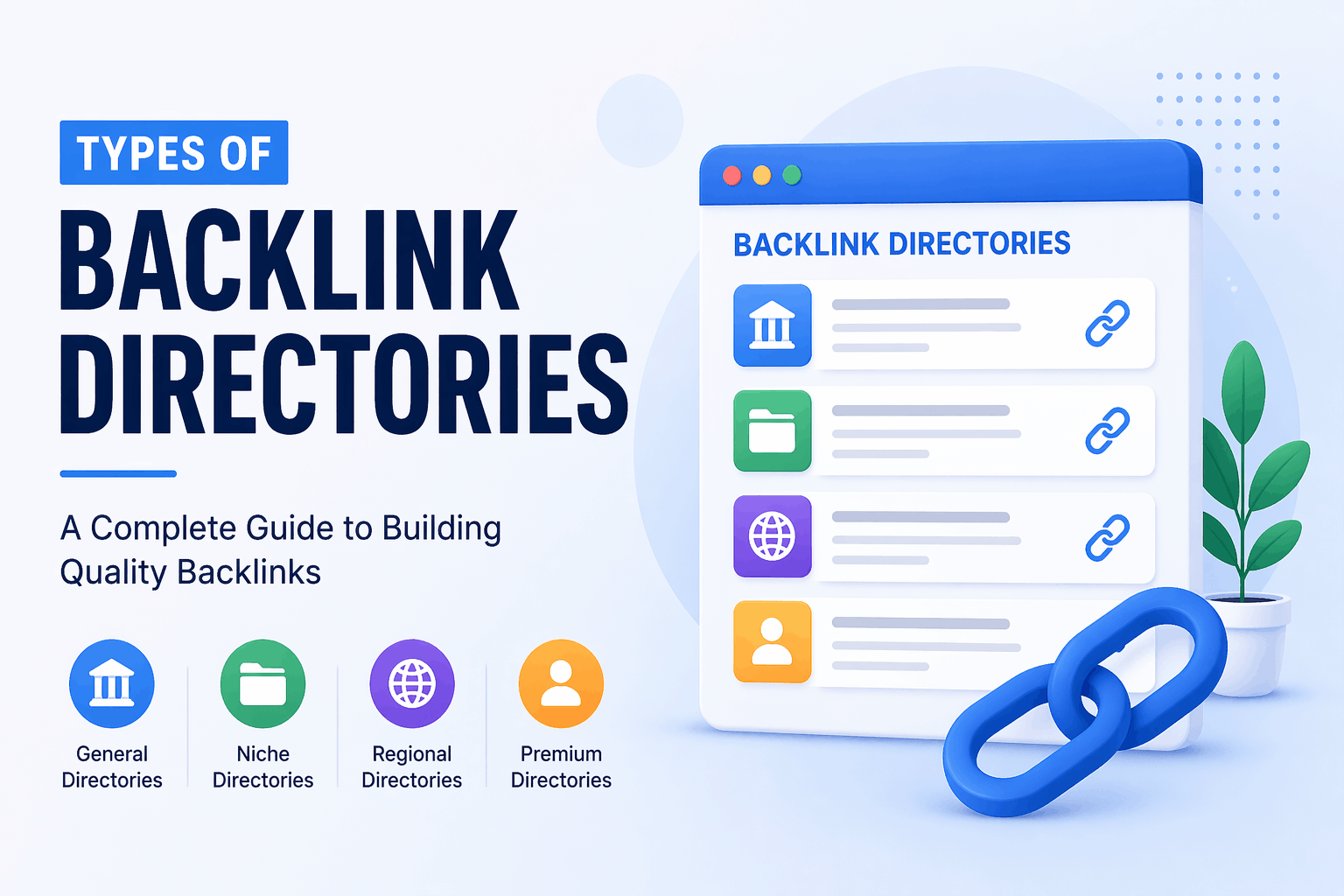
“Backlink directory” sounds like one thing, but it is really a bundle of different surfaces: startup directories, software alternatives, review platforms, creator profiles, business listings, and publishing platforms.
Treating them all the same is why most public backlink lists are junk.
Why “backlink directory” is too broad
Some directory submissions are pure SEO plays. Others are discovery channels. Others are reputation surfaces.
A Chrome Web Store listing is not the same as a SaaS alternatives site, and neither behaves like a local citation or a Medium profile.
That matters because the right directory depends on what you are trying to accomplish:
- Raise domain authority with high-trust profiles and listings
- Get discovered in product comparison workflows
- Build brand entity consistency across the web
- Capture referral traffic from niche communities
- Support local or service-business trust signals
The 6 directory types that matter most
1. Major platforms
These are high-authority profile and listing surfaces like GitHub, Crunchbase, Medium, Yelp, and the Chrome Web Store.
These are usually the first submissions worth doing because they combine:
- strong domain authority
- real brand legitimacy
- high indexing likelihood
- long-term profile stability
For many companies, these platforms matter more than dozens of random startup directories.
2. Product directories
Launch and discovery sites for startups, SaaS products, and AI tools.
These often combine backlinks with referral traffic and early-user discovery. Examples include BetaList, TinyLaunch, PromoteProject, and similar launch platforms.
These are useful when:
- you are launching a new product
- you want startup or maker visibility
- your product benefits from browse-and-discover traffic
3. Review and alternatives sites
Platforms like TrustRadius, SaaSHub, and AlternativeTo.
Some use nofollow links, but they still matter for software discovery, buyer intent, and entity visibility.
These are especially useful for:
- SaaS products
- AI tools
- open source alternatives
- software with clear competitors
4. Publishing platforms
Medium, Substack, Blogger, and other publishing-first surfaces are not directories in the classic sense, but they still contribute to your backlink and entity footprint.
These work best when you use them to publish real content, not thin profile pages.
5. Community platforms
Reddit, Quora, Indie Hackers, Hacker News, and similar communities can support visibility even when the links themselves are mixed or nofollow.
These help with:
- discovery
- brand mentions
- topical relevance
- audience feedback
The SEO value is often indirect, but the visibility value can be high.
6. Local and service-business listings
For agencies, consultants, and local businesses, sites like Yelp and ProvenExpert often matter more than startup launch directories.
Relevance beats novelty here.
Which directories should different businesses prioritize?
SaaS products
Start with high-authority company and product surfaces, then layer on software-specific discovery sites.
For most SaaS teams that means:
- GitHub
- Crunchbase
- Medium
- TrustRadius
- SaaSHub
- AlternativeTo
- a handful of launch directories
AI tools
AI tools should emphasize both authority and topical relevance.
Broad high-DR profiles still matter, but AI-native directories like FutureTools, Dang AI, RankYourAI, and Hot100 AI can be just as valuable for discovery.
Chrome extensions
Chrome Web Store is the obvious first move.
After that, focus on:
- GitHub
- GitHub Pages
- developer profiles
- extension-specific listing sites
Creators and publishers
Medium, Substack, Patreon, Buy Me a Coffee, Flickr, Pixabay, and Pexels often matter more than software directories.
For creators, the entity and audience layer is often stronger than the raw “link juice” layer.
Local businesses and agencies
Yelp, ProvenExpert, Crunchbase, and selective business directories tend to outperform startup launch sites.
What most backlink lists get wrong
Most public lists collapse very different opportunities into one giant spreadsheet.
That leads to bad decisions like:
- submitting a local service business to irrelevant AI directories
- chasing dofollow links while ignoring buyer-intent review sites
- filling out dozens of low-trust startup directories with no topical relevance
- ignoring whether a listing is self-serve, editorial, paid, or niche-specific
A better workflow
- Start with the most authoritative, relevant profile and listing sites
- Add niche directories based on product type and audience
- Label each site by link type, pricing, review flow, and use case
- Track what you submitted, what went live, and what got indexed
Use the tool, not a giant article
Once you move beyond ten or fifteen directories, a static article becomes the wrong format.
You need filters for:
- category
- DR
- pricing
- link type
- best-fit use case
That is why we turned our list into a tool.
Use the interactive directory here: Backlink Directory Tool